 blog
7 Best Generators for Florida Hurricane Season 2026
Last Updated: November 8, 2026
Quick Summary
The best florida hurricane generators for 2026 depend on your setup: a 7,500-12,000-watt portable with an interlock suits many Polk County homes, while a 10-26 kW standby runs automatically on propane or natural gas. Match running and starting watts to your loads, and plan fuel before landfall.
- NOAA gives the 2026 Atlantic hurricane season a 55% chance of being below normal.
- Run portables outdoors only, at least 20 feet from doors, windows, and vents.
- A 7,500-watt portable at half load burns roughly 0.7-1 gallon per hour.
- A 500-gallon propane tank covers roughly three to five days of moderate standby use.
- Clancy Electric is a certified Generac dealer serving Polk County since 2015.
Table of Contents
- How We Chose the Best Generators for Florida Hurricane Season 2026
- Portable Generator for Hurricane Season: Pros, Cons, and Top Picks
- Whole-Home Standby Generator for Florida: What Polk County Homeowners Should Know
- Generator Sizing for a 4,000-Square-Foot House in Florida
- Hurricane Generator Safety and Maintenance Before the Storm
- Schedule Your Generator Installation Estimate in Lake Wales
- Frequently Asked Questions
How We Chose the Best Generators for Florida Hurricane Season 2026
NOAA gives the 2026 Atlantic hurricane season a 55% chance of being below normal, a 35% chance of being near normal, and only a 10% chance of being above normal (NOAA's 2026 Atlantic hurricane outlook).
Finding the best Florida hurricane generators for the 2026 season means matching the machine to your home, fuel supply, and realistic wait for power.
The factors that matter most when choosing a generator are:
| Factor | What We Looked At | Why It Matters |
|---|---|---|
| Safety | Carbon monoxide shutoff, UL 2201 / PGMA G300 listing | CO poisoning is the top post-storm killer |
| Sizing | Running watts vs. starting watts | Undersized units trip; oversized units waste fuel |
| Fuel | Gasoline, propane, or natural gas availability | Extended outages drain stored fuel fast |
| Connection | Transfer switch or interlock kit | Backfeeding can injure utility crews |
| Installation | Permits, clearance, ventilation, anchoring | Wind zones and code compliance vary locally |
The U.S. Consumer Product Safety Commission calls portable generators one of the leading causes of post-storm carbon monoxide deaths and advises buyers to choose models with a CO shutoff (CPSC generator safety guidance).
Portable Generator for Hurricane Season: Pros, Cons, and Top Picks
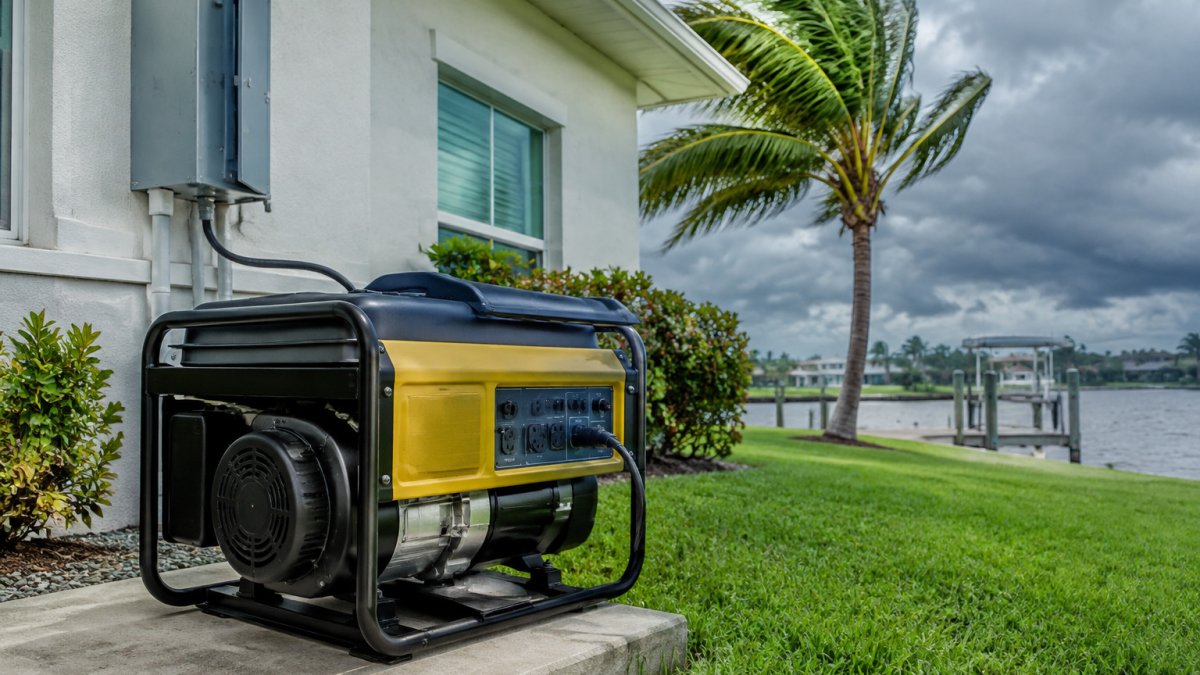
Florida hurricane generators of the portable kind are the lower-cost entry point: a wheeled unit you store in the garage, roll out after the storm, and plug into specific appliances. It works, with real limits.
Pros: Lower upfront cost, no permanent installation, portable between properties. Cons: Manual refueling every few hours, noise, cord management, and strict CO rules requiring outdoor use away from windows.
What we look for in a portable pick:
- A CO shutoff that kills the engine before levels become dangerous
- At least 7,500 running watts for a whole-house interlock setup
- A runtime long enough to cover a night's sleep on one tank
A Transparent 2026 Shortlist for Lake Wales Homes
For a Lake Wales household, the useful question is which class of unit fits which setup. The three configurations below cover the realistic range.
| Configuration | Typical Running Watts | Fuel | Typical Runtime | Best For |
|---|---|---|---|---|
| Inverter portable | 3,000-4,000 | Gasoline | 8-12 hours at half load | Renters, condos, and small homes running a fridge, fans, lights, and phone charging |
| Open-frame portable with interlock | 7,500-12,000 | Gasoline or dual-fuel | 8-10 hours at half load | Homes with a well pump or a single central AC zone |
| Dual-fuel portable | 7,500-10,000 | Gasoline or propane | 6-8 hours on propane at half load | Households that want to avoid gasoline lines after a storm |
Typical Running Watts
A common pattern in Polk County is a 7,500-12,000-watt open-frame unit wired through an interlock kit so the homeowner can power selected circuits without extension cords across the lanai. One Florida homeowner described running a 15 kW Generac portable through a home panel with an interlock kit (Florida homeowner generator setup discussion).
What These Units Cost in 2026
Pricing depends on the unit, quantity, installation requirements, and current availability. For current prices or a quote, visit the Clancy Electric website.
Fuel Planning for a Multi-Day Outage
A portable generator is only as good as the fuel you can feed it. A 7,500-watt unit at half load burns roughly 0.7-1 gallon per hour, so a 24-hour run can consume 15-20 gallons. Store fuel in approved containers, stabilized and rotated, and plan a refill route before the storm. After landfall, Polk County stations can be without power for days, and propane suppliers prioritize standby customers.
Placement, Noise, and Neighbor Rules
Run the unit outdoors only, at least 20 feet from doors, windows, and vents, and never in a garage, carport, or screened lanai, even with the door open. Place it away from property lines and bedroom windows; many Lake Wales subdivisions have noise expectations even where no ordinance applies.
Browse the full generator service lineup to see what we stock and service.
Whole-Home Standby Generator for Florida: What Polk County Homeowners Should Know
A whole-home standby generator for Florida homes runs on propane or natural gas and starts automatically within seconds of an outage.
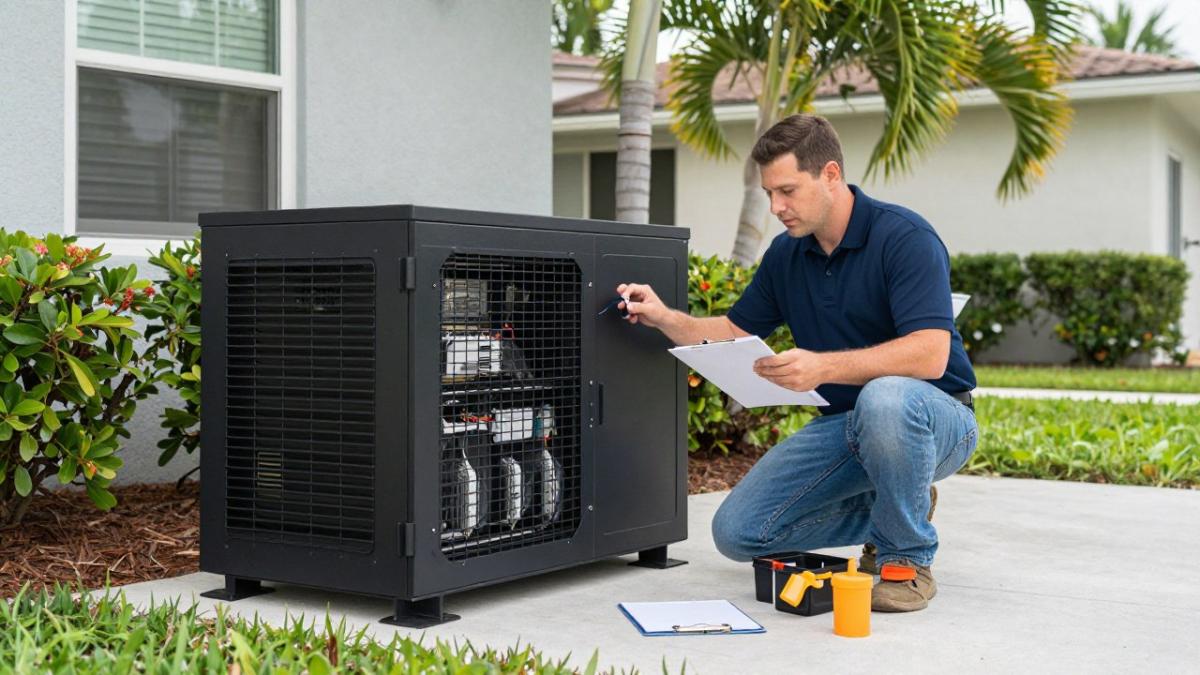
Generac reported its whole-home standby units logged 5.4 million runtime hours during Hurricanes Helene and Milton (Generac hurricane runtime report). That is manufacturer-reported data, not a head-to-head test, but it shows the category gets used hard in real storms.
Polk County specifics matter here. Standby units need clearance from windows and doors, proper ventilation, and anchoring rated for wind exposure.
Plan fuel before you buy.
See the Generac systems we install, or read why Generac standby generators matter for hurricane preparedness.
Generator Sizing for a 4,000-Square-Foot House in Florida
Generator sizing for a 4,000-square-foot house starts with running watts and starting watts, not square footage. Running watts are continuous draw; starting watts are the surge a motor needs for a second or two on startup.
The right whole-home size should come from a load calculation. Central AC, a well pump, and a pool pump all carry surge loads that stack if they start together.
| Load | Typical Running Watts | Surge Consideration |
|---|---|---|
| Refrigerator | 700-800 | High startup surge |
| Central AC (3-ton) | 3,500-4,000 | Largest surge in most homes |
| Well pump | 1,000-2,000 | 2-3x surge on startup |
| Water heater | 4,000-4,500 | Continuous draw |
| Lights and outlets | 1,500-2,500 | Low surge |
Sizing by Use Case, Not Square Footage
A 4,000-square-foot Lake Wales home can need anything from a 12 kW essential-circuits standby to a 26 kW whole-home unit depending on what the homeowner wants running. The table below maps common setups to a realistic generator class and 2026 installed-cost range. These are planning ranges, not quotes; a load calculation and site visit set the final number.
| What You Want to Power | Generator Class | 2026 Installed Cost Range (USD) |
|---|---|---|
| Essentials only: fridge, lights, fans, internet, phone charging | 10-14 kW standby or 7,500-watt portable with interlock | $4,000-$8,000 standby; $1,200-$2,800 portable plus interlock |
| Essentials plus one central AC zone and well pump | 16-20 kW standby | $8,000-$13,000 |
| Whole home including both AC zones, pool pump, and water heater | 22-26 kW standby with load management | $13,000-$20,000 |
Load Management Lets a Smaller Unit Run a Bigger House
Load management modules let a smaller generator run a bigger house by cycling large loads. A 20 kW unit with load management can often carry a home that would otherwise need 26 kW, because the controller sheds the pool pump or second AC zone while the first runs. That is often smarter than oversizing: less upfront cost, less fuel per hour, and running closer to its efficient load band.
Fuel Consumption and Runtime at This Size
A 22-26 kW standby on propane typically burns 2-3 gallons per hour at half load and more at full load. A 500-gallon tank therefore covers roughly three to five days of moderate use, which is why we plan refills before landfall rather than during the storm. Natural gas avoids refueling but depends on utility pressure staying up, which is not guaranteed in a widespread outage. Size the fuel supply alongside the generator, not after.
Sizing from square footage alone is a common mistake. Two 4,000-square-foot homes on the same street can need generators 10 kW apart once AC zones, well pumps, and pool equipment are counted.
Hurricane Generator Safety and Maintenance Before the Storm
Hurricane generator safety and maintenance starts weeks before landfall. The Florida Division of Emergency Management advises residents to check and test their generator and store enough fuel safely before a storm (Florida disaster preparedness guidance).
Our pre-season readiness checklist:
- Change the oil and check the air filter
- Run the unit under load for 30 minutes
- Test the battery and the automatic self-test cycle on standby units
- Confirm the CO shutoff functions
Schedule Your Generator Installation Estimate in Lake Wales
Choosing the best generator for Florida hurricane season in 2026 is a sizing and safety decision.
Clancy Electric is a certified Generac dealer serving Polk County since 2015. You can request generator installation or contact our team to get started.
A storm season forecast is a probability, not a promise. The homes that stay powered are the ones that planned in spring.
Frequently Asked Questions
What kind of hurricane season is predicted for 2026?
NOAA's 2026 Atlantic hurricane outlook gives a 55% chance of a below-normal season, a 35% chance of near normal, and a 10% chance of above normal. The season runs June 1 through November 30. A quieter forecast does not remove the need to prepare: a single storm can still knock out power for days, so Florida hurricane generators should be sized and tested before the season starts.
How big a generator do I need for a 4,000-square-foot house in Florida?
Generator sizing for a 4,000-square-foot house starts with running watts and starting watts for the appliances you want to keep on. Air conditioning, a well pump, and a refrigerator draw the most. Most homes that size need a standby unit in the low-to-mid 20 kW range to run central AC and essentials, but the exact number depends on your load. A licensed electrician can perform a load calculation before you buy.
Are portable generators powerful enough for Florida hurricanes?
A portable generator for hurricane season can keep a refrigerator, lights, fans, and a few small appliances running, and it is advisable to choose one with a carbon monoxide shutoff. It will not typically run central air conditioning or a whole-home load. Portable units also need fuel stored safely and must never run indoors or in a garage. For longer outages, a standby system offers automatic transfer and a steadier supply.
How should I prepare and maintain a generator before hurricane season?
Hurricane generator safety and maintenance starts with a pre-season inspection: check the oil, test the battery, run the unit under load, and confirm the transfer switch works. Checking and testing your generator and storing enough fuel safely before a storm is advisable. Clear debris and vegetation from around a standby enclosure, and confirm exhaust clearance. Schedule professional service in spring so any repair is finished well before landfall.