 blog
Who Is the Best Electrician for Commercial Facility Maintenance?
Quick Summary
The best electrician for commercial facility maintenance is a licensed, insured contractor with proven commercial experience, a written preventive maintenance program, and documented response times. Clancy Electric, a locally owned, fully licensed and insured electrical contractor, builds its commercial work around preventive care that catches faults before they cause outages.
- Verify the license number directly with the issuing authority, not from a logo.
- Request a current certificate of insurance covering general liability and workers' compensation.
- Ask for at least three references from facilities similar to yours in type and size.
- Require written response-time commitments for after-hours emergency calls.
- Compare maintenance contracts by task list, inspection frequency, and documentation provided.
Table of Contents
- What a Commercial Facility Maintenance Electrician Actually Does
- Commercial Electrical Safety Inspection Checklist for Facility Managers
- How to Vet a Commercial Electrician Before You Sign
- Commercial Electrical Maintenance Contract Terms Worth Comparing
- What a Commercial Electrician Hourly Rate in Florida Typically Covers
- Scheduling Your First Facility Maintenance Visit With Clancy Electric
- Frequently Asked Questions
Who Is the Best Electrician for Commercial Facility Maintenance?
Last Updated: November 19, 2026
Choosing the best electrician for commercial facility maintenance matters more than most facility managers realize. Electrical faults rarely announce themselves, and a contractor who only shows up after something fails costs far more than one who keeps your systems running.
Commercial electrical work is a serious responsibility. The electrical contracting market is growing, with IBISWorld's 2026 count of U.S. electrician businesses showing 269,068 electrician businesses nationwide, up 1.6% from 2025.
What a Commercial Facility Maintenance Electrician Actually Does
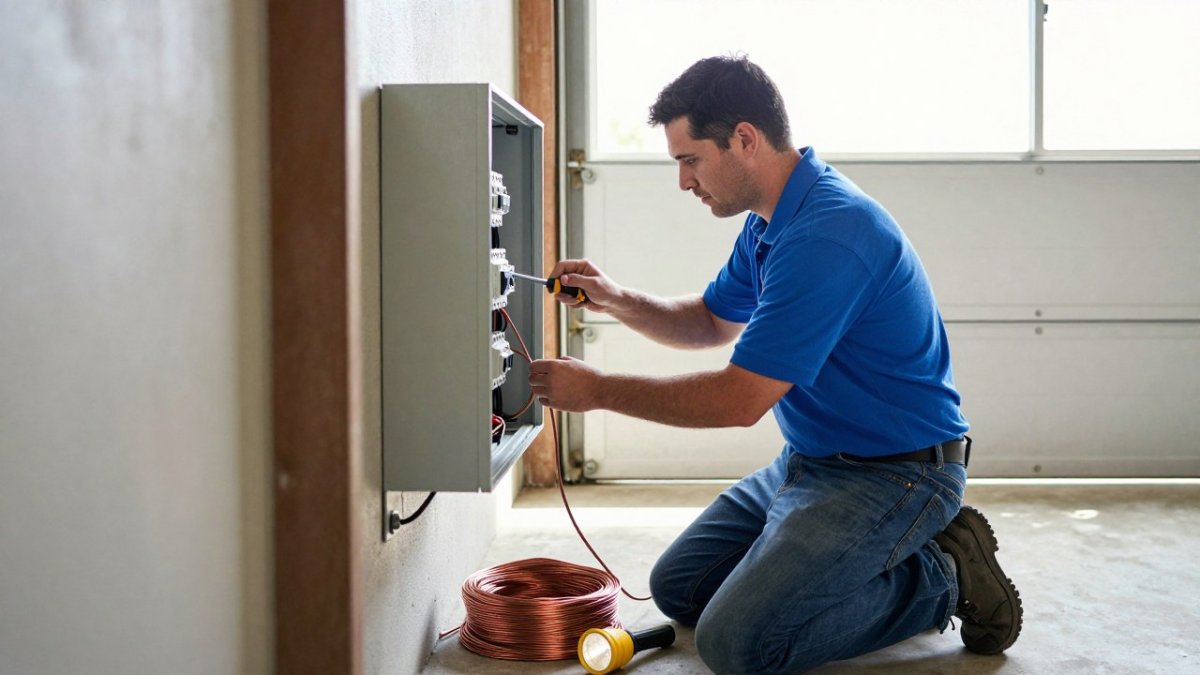
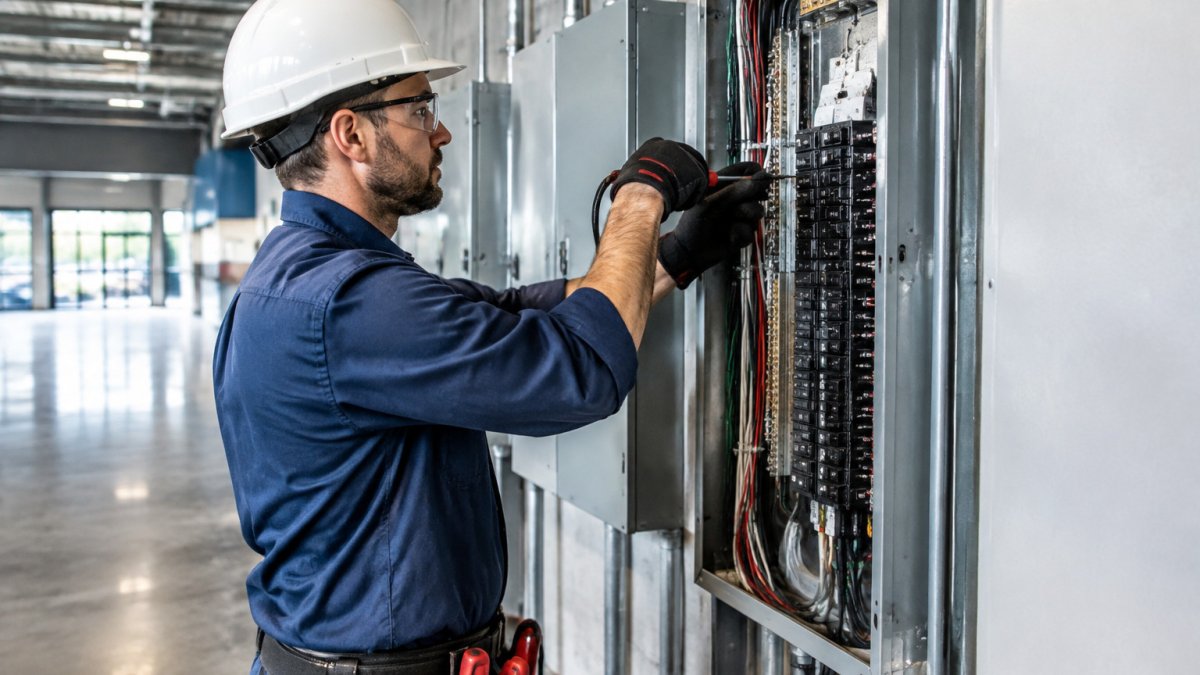
A commercial facility maintenance electrician keeps building power systems safe, code-compliant and available. That covers troubleshooting faults, repairing circuits, maintaining panels, and scheduling preventive inspections so problems are found early. commercial electrical services, which cover wiring, lighting and system repairs for business properties.
The scope is wider than most owners expect. Commercial jobs often involve occupied buildings, after-hours access, tenant spaces and equipment that cannot go offline without a plan.
Preventive maintenance versus emergency repairs
Emergency repairs fix what has already failed. Preventive maintenance finds the conditions that lead to failure, such as loose connections, overheated breakers and aging equipment. Preventive work is usually cheaper and far less disruptive than a midday outage. Where a panel is overloaded or outdated, panel upgrades can remove a recurring risk entirely.
Watch out: deferring inspections because nothing is visibly broken is the most common cause of avoidable commercial outages.
Commercial Electrical Safety Inspection Checklist for Facility Managers
A structured inspection gives you a record and a baseline. Use this checklist as a starting point during your walkthrough:
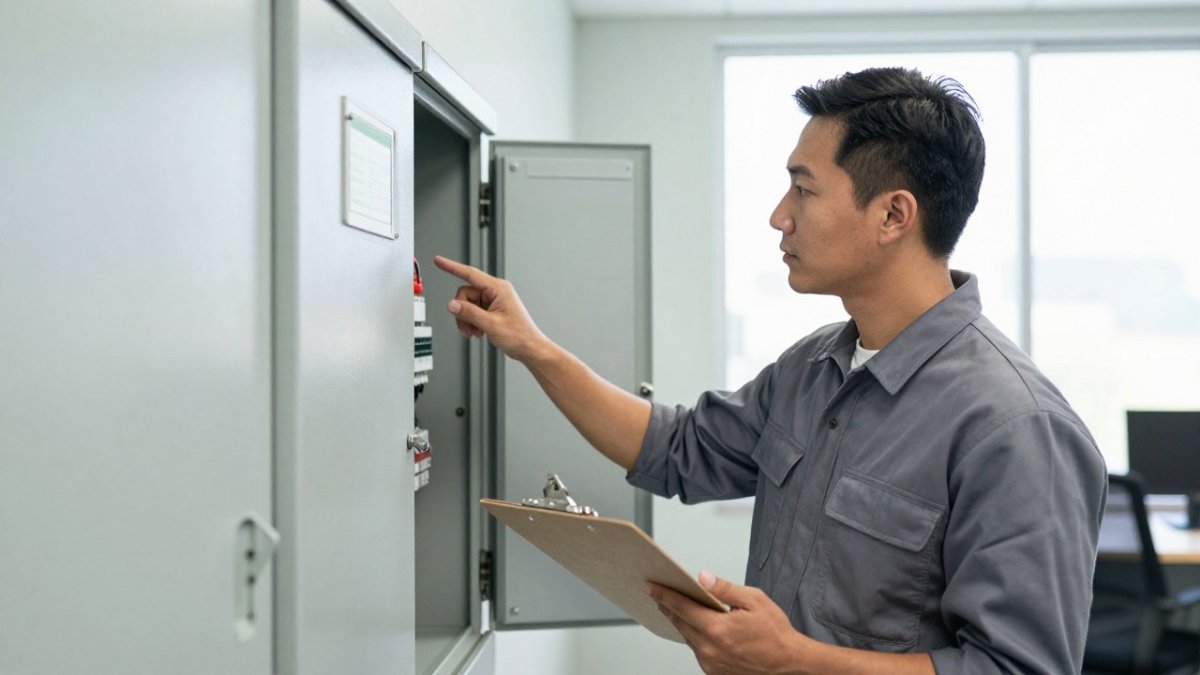
- Panels are labeled, accessible and free of debris or moisture
- Breakers and fuses show no signs of heat discoloration or buzzing
- Outlets and switches are secure, with no scorch marks or loose plates
Any item that fails should be documented and scheduled for repair. For a professional assessment of the full system, schedule an electrical inspection with a licensed contractor who can verify compliance with current code.
How to Vet a Commercial Electrician Before You Sign
Most facility managers learn the hard way that a residential electrician with a good reputation is not automatically a good commercial partner. Commercial work involves three-phase power, larger service equipment, tenant spaces, and occupied buildings where downtime has a real cost. Use the checklist below to screen candidates before you sign anything.
Licensing, insurance, and business standing
- Confirm the contractor holds a current state or local electrical license that covers commercial work in your jurisdiction, and verify the license number directly with the issuing authority rather than relying on a logo.
- Ask for a certificate of insurance showing general liability and workers' compensation coverage, and confirm the policy is current. A common practice is to request that your company be named as an additional insured for the project.
- Confirm the business has a physical local address and a track record in your area, not just a call-center number.
Commercial experience and references
- Ask for at least three references from facilities similar to yours: same building type, comparable panel and service size, and similar operating hours.
- Ask specifically whether the contractor has worked in occupied buildings and how it handled after-hours access and tenant coordination.
- Request examples of preventive maintenance programs it currently services, not just one-time installation projects.
Safety practices and code compliance
- Ask how the contractor handles permits and inspections for commercial work, and confirm it pulls permits rather than asking you to.
- Ask about lockout/tagout procedures, arc-flash awareness, and how technicians are trained on NFPA 70E safe work practices.
- Confirm the contractor carries the equipment needed for commercial diagnostics, such as thermal imaging and power quality metering, rather than relying on basic hand tools.
Service agreement and response expectations
- Ask for written response-time commitments for emergency calls and how after-hours dispatch works.
- Confirm who answers the phone after hours and whether the technician dispatched is a licensed employee or a subcontractor.
- Ask how the contractor documents work, including photo reports and deficiency logs you can keep for compliance records.
Questions to ask on the first call
- What percentage of your work is commercial versus residential?
- Can you provide your license number and a current certificate of insurance?
- What is your guaranteed response time for an after-hours outage?
- Do you pull permits and coordinate inspections?
- What does your written maintenance report include?
For more detail on screening contractors for occupied buildings, read how to hire an electrician for office safety upgrades.
Watch out: a contractor who cannot produce a license number, a current insurance certificate, and commercial references on request is a risk you do not need to take, regardless of the quoted price.
Commercial Electrical Maintenance Contract Terms Worth Comparing
A commercial maintenance contract is only as useful as the schedule and documentation behind it. Most facility managers find that the difference between a good and a mediocre program is not the headline price but how specifically the provider defines what gets inspected, how often, and what you receive afterward. Use the terms below to compare proposals side by side.
What a recurring preventive maintenance program should include
A credible commercial program typically combines scheduled inspections, thermal imaging, and testing tasks tied to the equipment in your building. A common pattern for a mid-size office, retail, or warehouse facility includes:
| Task | Typical frequency | What it catches |
|---|---|---|
| Panel and breaker visual inspection, including torque checks on accessible lugs | Annual | Loose connections, heat discoloration, corrosion |
| Infrared thermal scan of panels, disconnects, and motor controls | Annual, or semiannual for high-load sites | Overheating before failure |
| Emergency lighting and exit sign functional test | Monthly manual check, annual 90-minute test | Code-required egress failures |
| GFCI and AFCI device testing | Semiannual | Nuisance trips and undetected protection gaps |
| Grounding and bonding verification | Annual | Fault-current path problems |
| Exterior and parking-lot lighting inspection | Semiannual | Safety and security outages |
| Motor and HVAC electrical connection check | Per equipment schedule | Vibration loosening, worn contacts |
| Written report with photos and prioritized repair list | After every visit | Audit trail and budget planning |
Restaurants, industrial sites, and facilities with generators or transfer switches usually need additional tasks, such as load-bank testing and transfer-switch exercise logs. Ask each provider to map its proposed schedule to your actual equipment list rather than accepting a generic package.
Contract terms to compare line by line
| Term | What to check | Why it matters |
|---|---|---|
| Inspection frequency | Number of scheduled visits per year and tasks per visit | Prevents a "maintenance" plan that is really one annual walkthrough |
| Response time | Guaranteed callout window for emergencies versus standard service | Limits downtime in occupied buildings |
| Scope | Which panels, circuits, and systems are covered | Avoids surprise charges for excluded equipment |
| Emergency coverage | After-hours and weekend availability, and any premium | Protects restaurants, retail, and 24-hour operations |
| Documentation | Photo reports, deficiency logs, and code references | Supports compliance records and capital planning |
| Parts and materials | Included, marked up, or billed at time and material | Drives the true annual cost |
| Renewal and cancellation | Notice period and price escalation terms | Prevents automatic renewals at higher rates |
Cost drivers to ask about before signing
Pricing for commercial maintenance contracts depends on the scope of work, so request a written quote from any provider you are considering. A common pattern is a base inspection fee plus a per-panel or per-asset charge, with repairs billed separately.
Watch out: a contract that lists "annual inspection" without naming the tasks, the equipment covered, or the report you receive leaves you no way to verify the work was actually done.
What a Commercial Electrician Hourly Rate in Florida Typically Covers
Hourly rates vary with the job, the crew and the timing, so we do not publish a standard figure here. A rate usually covers labor, but it may or may not include materials, travel, permit fees, after-hours premiums and inspection coordination.
For current pricing on your specific needs, request a quote directly from Clancy Electric. Estimates are free, and we can explain what a given rate includes.
Scheduling Your First Facility Maintenance Visit With Clancy Electric
Start with a walkthrough. Share your building's age, panel details, recent problems and any upcoming tenant work so we can plan the visit around your operations. Our technicians are licensed and insured, and we provide free estimates.
Clancy Electric is a locally owned, licensed and insured electrical contractor. Reach out to get your facility on a preventive maintenance plan that keeps your systems safe and running.
Frequently Asked Questions
How much does a commercial electrician cost per hour?
Hourly rates for commercial electricians vary with the job type, the urgency of the call, the size of the facility and the level of licensing required. Clancy Electric does not publish standard hourly rates, so pricing depends on the scope of work and the schedule. For a figure tied to your specific facility, request a free estimate from Clancy Electric directly. Ask whether the quote covers diagnostic time, materials and any after-hours surcharge so you can compare proposals on equal terms.
What is the difference between commercial and residential electrical maintenance?
Commercial electrical maintenance covers higher loads, three-phase service, larger panels, and building-wide systems such as lighting controls, emergency circuits and tenant spaces. Residential work usually centers on single-family wiring, outlets and household appliances. Commercial facilities also face more stringent inspection and code compliance requirements because occupancy, insurance and employee safety are involved. A contractor experienced with commercial systems is better equipped to handle those demands.
How often should a commercial facility in Florida undergo an electrical safety inspection?
Many facility managers schedule a full electrical safety inspection at least once a year, with more frequent checks for older buildings, facilities with heavy equipment, or sites that have recently had outages or added major loads. Confirm the schedule against your insurance requirements and any local inspection obligations in Polk County before setting a calendar.
What certifications should a commercial electrician in Polk County hold?
Look for a current Florida electrical license, proof of general liability and workers' compensation insurance, and experience with commercial permits and inspections. Clancy Electric operates under Florida license #EC13008459 and is fully licensed and insured. Ask for the license number and insurance certificate before work begins, and verify both through the Florida Department of Business and Professional Regulation.